
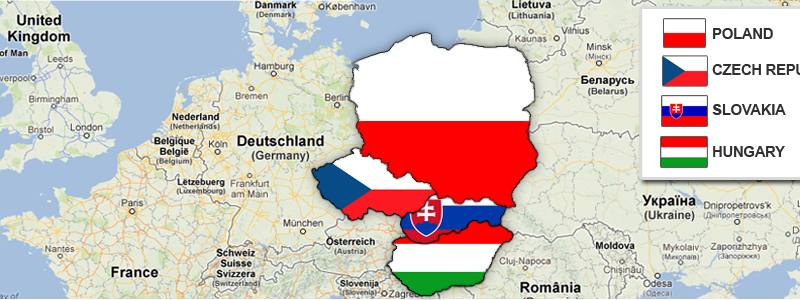
AP in V4 Lecture Series — Analytic Philosophy in Visegrad Countries
AP in V4 Lecture Series — Analytic Philosophy in Visegrad Countries
Tytuł: New Applications of the Directival Theory of Meaning
Prelegent: Paweł Grabarczyk (IT University of Copenhagen)
Data i godzina: 8 stycznia 2026 r., godz. 15:00 (CET)
Forma: wykład online
Project website: https://ff.osu.eu/ap-in-v4/
Organizatorzy: Uniwersytet Mateja Bela w Bańskiej Bystrzycy (Słowacja), Uniwersytet Ostrawski (Czechy) oraz Uniwersytet Warszawski (Polska), przy wsparciu Visegrad Fund.
Wykład odbywa się w ramach projektu AP in V4 Lecture Series — Analytic Philosophy in Visegrad Countries, poświęconego wkładowi filozofów z krajów wyszehradzkich w rozwój filozofii analitycznej, logiki i współczesnych teorii znaczenia.
Abstrakt
Dyrektywalna teoria znaczenia (DTM) jest pionierską odmianą semantyki roli funkcjonalnej, opracowaną w latach 30. XX w. przez polskiego filozofa Kazimierza Ajdukiewicza. Pomimo nowatorskich intuicji, sam Ajdukiewicz nigdy w pełni jej nie rozwinął i teoria przez długi czas pozostawała raczej historyczną ciekawostką. W 2019 roku opublikowałem książkę, w której pokazuję, w jaki sposób pierwotne ujęcie można rozbudować tak, aby wykraczało poza zamysł Ajdukiewicza i dało się zastosować do języków naturalnych. W zakończeniu książki proponuję ponadto dwa nowe zastosowania teorii, które mogą zainteresować współczesnych filozofów.
Pierwsze z tych zastosowań polega na potraktowaniu DTM jako teorii fikcji literackiej. Drugie – na wykorzystaniu DTM jako podstawy teorii wiedzy dla sztucznej inteligencji. W swoim wystąpieniu najpierw przedstawiam podstawowe elementy dyrektywalnej teoria znaczenia, niezbędne do zrozumienia obu rozszerzeń. Następnie wyjaśniam, jak teoria może zostać użyta do analizy dyskursów o bytach fikcyjnych oraz w jaki sposób może okazać się użyteczna przy konstruowaniu nowych modeli SI.
O prelegencie
Paweł Grabarczyk jest profesorem na IT University of Copenhagen, związanym z sekcją Play, Culture, and AI, gdzie pełni funkcję kierownika grupy badawczej Games Research Group i współpracuje z ośrodkami zajmującymi się grami cyfrowymi oraz edukacją informatyczną. Zajmuje się także filozofią języka, filozofią umysłu, game studies oraz semantyką, ze szczególnym uwzględnieniem dyrektywalnej teorii znaczenia Ajdukiewicza i podejść funkcjonalno-roliowych do znaczenia.
Jest autorem monografii Directival Theory of Meaning: From Syntax and Pragmatics to Narrow Linguistic Content (Springer, 2019), pierwszego pełnego opracowania tej teorii w języku angielskim. Poza teorią znaczenia i pojęć publikuje również w obszarze filozofii gier i game studies – m.in. na temat ontologii gier, klasyfikacji wersji i portów, roli losowości i tzw. lootboksów w grach oraz specyfiki tzw. walking simulators.
Osoby zainteresowane udziałem proszone są o kontakt mailowy ( zuzana.rybarikova@osu.cz) w celu otrzymania informacji organizacyjnych.
————————————————————————————————————————–
Call for Participation
AP in V4 Lecture Series — Analytic Philosophy in Visegrad Countries
Date: 8th January 2026, 3 PM (CET)
Format: Online lecture
Organised by: Matej Bel University in Banská Bystrica, Slovakia, University of Ostrava, Czech Republic, University of Warsaw, Poland, with the support of Visegrad Fund
Project website: https://ff.osu.eu/ap-in-v4/
Paweł Grabarczyk (IT University in Copenhagen)
Title: New applications of the directival theory of meaning
Abstract:
The Directival Theory of Meaning (DTM from now on) is a pioneering form of functional-role semantics devised by the Polish philosopher Kazimierz
Ajdukiewicz in the 1930s. Despite some groundbreaking ideas, the theory was never fully developed by its author and remained a historical curiosity. In 2019,
I published a book that shows how the original theory can be expanded so that it transcends Ajdukiewicz’s initial vision and applies to natural languages. In the
book’s conclusion, I suggested two additional applications of the theory that may be of interest to contemporary philosophers. The rst of these applicati-
ons is treating the DTM as a theory of literary ction. The second is treating the DTM as a basis for a theory of knowledge for Arti cial Intelligence.
In my talk, I begin by providing the basics of the DTM that are necessary to understand these expansions. Next, I explain how the theory can be used
to account for discourses about ctional entities and how it may prove useful for building new AI models, in particular explainable AI.
About the Speaker
Paweł Grabarczyk is an Associate Professor at the IT University of Copenhagen, where he is part of Play, Culture, and AI and serves as Head of the Games Research Group, affiliated with the Center for Digital Play and the Center for Computing Education Research. He works primarily in philosophy of language, philosophy of mind, game studies, and semantics, with a special focus on Kazimierz Ajdukiewicz’s Directival Theory of Meaning and functional-role approaches to meaning.
He is the author of Directival Theory of Meaning: From Syntax and Pragmatics to Narrow Linguistic Content (Springer, 2019), which offers the first systematic treatment of the Directival Theory of Meaning in English and develops a novel framework combining syntactic, pragmatic, and narrow-content considerations. Beyond his work on meaning and concepts, he has also published on topics in game studies and the philosophy of games, including research on game jams and how games can engage with “heavy” or anxiety-inducing topics, as well as on issues at the intersection of AI, explanation, and digital design.
More information: https://pure.itu.dk/en/persons/pawel-grabarczyk/
If you are interested to join, please contact zuzana.rybarikova@osu.czhttps://ff.osu.eu/ap-in-v4/lectures/