
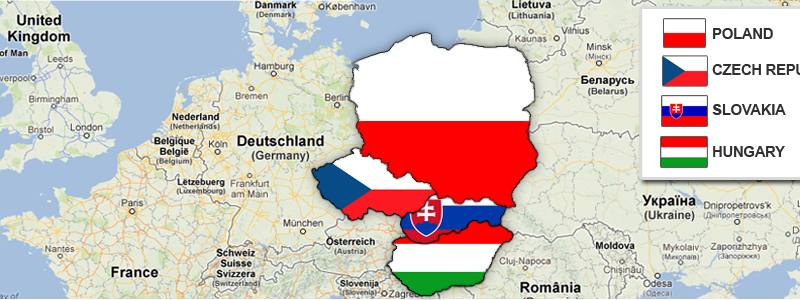
AP in V4 Lecture Series — Analytic Philosophy in Visegrad Countries
Call for Participation AP in V4 Lecture Series — Analytic Philosophy in Visegrad Countries
Title: The Concept of Truth in the Lvov–Warsaw School
Speaker: Peter Simons (Trinity College Dublin)
Date and time: 12 February 2026, 16:00–17:30 CET (4:00–5:30 p.m. CET)
Format: Online lecture (5/9 in the lecture series)
Organised by: Matej Bel University in Banská Bystrica (Slovakia), University of Ostrava (Czech Republic), and University of Warsaw (Poland), with the support of the Visegrad Fund.
Project website: https://ff.osu.eu/ap-in-v4/
Lecture series page: https://ff.osu.eu/ap-in-v4/lectures/
If you are interested in joining, please contact: zuzana.rybarikova@osu.cz
Abstract
Arguably the foremost development among theories of truth in the twentieth century was Alfred Tarski’s paper “On the Concept of Truth in the Languages of the Deductive Sciences” (“Pojęcie prawdy w językach nauk dedukcyjnych”), first published in 1933. It is the single most influential piece to come out of the Lvov–Warsaw School. Tarski’s work and its ramifications influenced work on truth throughout most of the rest of the century. But the paper did not arise in a vacuum: philosophers and logicians in the School from Twardowski onwards laid great stress on truth as a central concept in logic and philosophy, and their discussions have roots going far back in the history of philosophy.
Not only Twardowski but also his first-generation pupils Łukasiewicz, Leśniewski, Kotarbiński and Ajdukiewicz made important contributions to the topic. And while Tarski brought technical brilliance to the discussion, his own theory has its shortcomings as a general account of truth. This talk will trace the course of discussions within the School, outline how they influenced subsequent treatments, and assess how far their work brought the theory of truth towards final adequacy.
About the speaker
Peter Simons is a British-Austrian philosopher and one of the key figures in contemporary metaphysics and ontology. He is Emeritus Professor of Moral Philosophy at Trinity College Dublin and has also held chairs in philosophy at the University of Leeds, as well as posts in Salzburg and visiting positions in Lugano. His research focuses on ontology, mereology (the theory of parts and wholes), truthmaker theory, the history of logic, and the history of Central European philosophy from Bolzano and Brentano to Tarski.
He is the author of the classic monograph “Parts: A Study in Ontology” (Oxford: Clarendon Press, 1987) and “Philosophy and Logic in Central Europe from Bolzano to Tarski: Selected Essays” (Kluwer, 1992), and has written more than two hundred articles and chapters on metaphysics, logic, and the Central European analytic tradition. Together with Kevin Mulligan and Barry Smith, he co-founded the Seminar for Austro-German Philosophy, which played an important role in bringing the Austro-Polish tradition of analytic philosophy to wider international attention. His achievements have been recognised by his election as a Fellow of the British Academy and membership in the Academia Europaea, the Royal Irish Academy, and the Polish Academy of Sciences.
————————————————————
Zaproszenie do udziału
AP in V4 Lecture Series — Analytic Philosophy in Visegrad Countries
Tytuł: The Concept of Truth in the Lvov–Warsaw School
Prelegent: Peter Simons (Trinity College Dublin)
Data i godzina: 12 lutego 2026 r., 16:00–17:30 (CET)
Forma: wykład online (5. z 9 w serii wykładów)
Organizatorzy: Uniwersytet Mateja Bela w Bańskiej Bystrzycy (Słowacja), Uniwersytet Ostrawski (Czechy) oraz Uniwersytet Warszawski (Polska), przy wsparciu Visegrad Fund.
Strona projektu: https://ff.osu.eu/ap-in-v4/
Strona cyklu wykładów: https://ff.osu.eu/ap-in-v4/lectures/
Osoby zainteresowane udziałem proszone są o kontakt: zuzana.rybarikova@osu.cz
Abstrakt
Za jedno z najważniejszych dokonań w dziedzinie teorii prawdy w XX wieku uchodzi artykuł Alfreda Tarskiego „O pojęciu prawdy w językach nauk dedukcyjnych”, opublikowany po raz pierwszy w 1933 roku. Jest to najbardziej wpływowy tekst, jaki powstał w ramach szkoły lwowsko-warszawskiej. Praca Tarskiego i jej konsekwencje oddziaływały na dyskusje o prawdzie przez większą część ubiegłego stulecia. Artykuł ten nie powstał jednak w próżni: filozofowie i logicy szkoły lwowsko-warszawskiej, począwszy od Twardowskiego, przywiązywali ogromną wagę do pojęcia prawdy jako centralnego zagadnienia logiki i filozofii, a ich rozważania mają korzenie sięgające daleko w historię filozofii.
Istotny wkład w te debaty wnieśli nie tylko sam Twardowski, lecz także jego pierwsi uczniowie: Łukasiewicz, Leśniewski, Kotarbiński i Ajdukiewicz. Choć Tarski wniósł do dyskusji wyjątkową finezję techniczną, jego własna teoria ma pewne słabości jako ogólny obraz prawdy. W swoim wystąpieniu Peter Simons prześledzi rozwój dyskusji nad prawdą w ramach szkoły lwowsko-warszawskiej, naszkicuje ich wpływ na późniejsze ujęcia oraz spróbuje ocenić, w jakim stopniu doprowadziły one teorię prawdy do stanu bliskiego ostatecznej adekwatności.
O prelegencie
Peter Simons jest brytyjsko-austriackim filozofem, jednym z czołowych współczesnych metafizyków i ontologów. Jest emerytowanym profesorem filozofii moralnej na Trinity College w Dublinie; wcześniej był profesorem filozofii na University of Leeds, pracował również w Salzburgu oraz jako profesor wizytujący w Lugano. Jego badania koncentrują się na ontologii, mereologii, teorii uprawdziwiaczy, historii logiki oraz historii filozofii w Europie Środkowej.
Simons jest autorem klasycznej monografii „Parts: A Study in Ontology” (Oxford: Clarendon Press, 1987) oraz tomu „Philosophy and Logic in Central Europe from Bolzano to Tarski: Selected Essays” (Kluwer, 1992), a także ponad dwustu artykułów i rozdziałów poświęconych metafizyce, logice i filozofii środkowoeuropejskiej. Współtworzył, wraz z Kevinem Mulliganem i Barrym Smithem, Seminarium Filozofii Austriacko-Niemieckiej, które odegrało ważną rolę w przybliżaniu tradycji austriacko-polskiej filozofii analitycznej szerszej publiczności. Jego dorobek został uhonorowany licznymi wyróżnieniami, w tym wyborem na członka British Academy, Academia Europaea, Royal Irish Academy oraz Polskiej Akademii Nauk.