
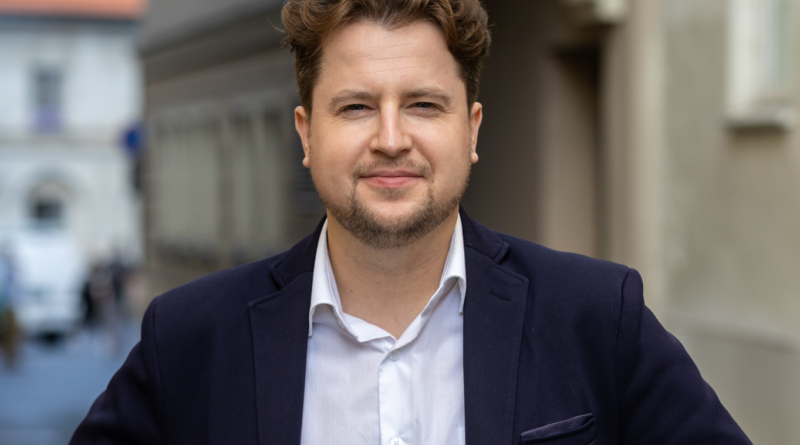
Guest Lectures by Professor Laurynas Peluritis (April 20 -23, 2026)
The European Centre for Philosophy of Culture (Faculty of Philosophy, UW) invites for the lectures by Professor Laurynas Peluritis (Vilnius University). Our guest will deliver three lectures devoted to the history and meaning of the concepts of revolution, utopia, and tolerance. The lectures will take place on April 20 and 23 at the Faculty of Philosophy (Krakowskie Przedmieście 3).
The History of the Concept of Revolution
The question many intellectuals on the left ask is whether revolutionary discourse is in crisis. Possibly. But maybe this is a crisis in the philosophy of history and the political imagination rather than in revolutionary action. Addressing the critique of modern revolutionary discourse by Hannah Arendt and Reinhart Kosseleck, this lecture will explore the possibility of reimaging revolution as a still-relevant political concept in a non-Marxist way.
Time: 20.04, 6:30-8:30pm
Place: room 4 (ground floor)
The History of the Concept of Utopia
Why are utopias important in political discourse? What can we learn from the history of concepts as we retrace their development? Is utopian thinking a phenomenon of the past? And finally, what can we learn from Thomas More’s Utopia about politics and philosophy today?
Time: 23.04, 1:15-2:45 pm
Place: room 208 (2nd floor)
The History of the Concept of Tolerance
What is tolerance in political and social life? Is it a fundamental virtue necessary for sustaining pluralistic societies or merely a pragmatic concession to preserve stability? The lecture will explore whether tolerance is inherently a moral good or whether it must be evaluated in relation to external principles such as justice, power, and social cohesion. Is tolerance always a force for good, or can it serve as an instrument of oppression?
Time: 23.04, 3-4:30pm
Place: room 208 (2nd floor)
Laurynas Peluritis is an Associate Professor at the Institute of Philosophy at Vilnius University and a lecturer at the Faculties of Philosophy and History. His research focuses on political philosophy, the history of ideas and concepts, and Lithuanian philosophy.